
Swiss Payment Transactions 2026: What Needs to Be Checked in the SAP System Now
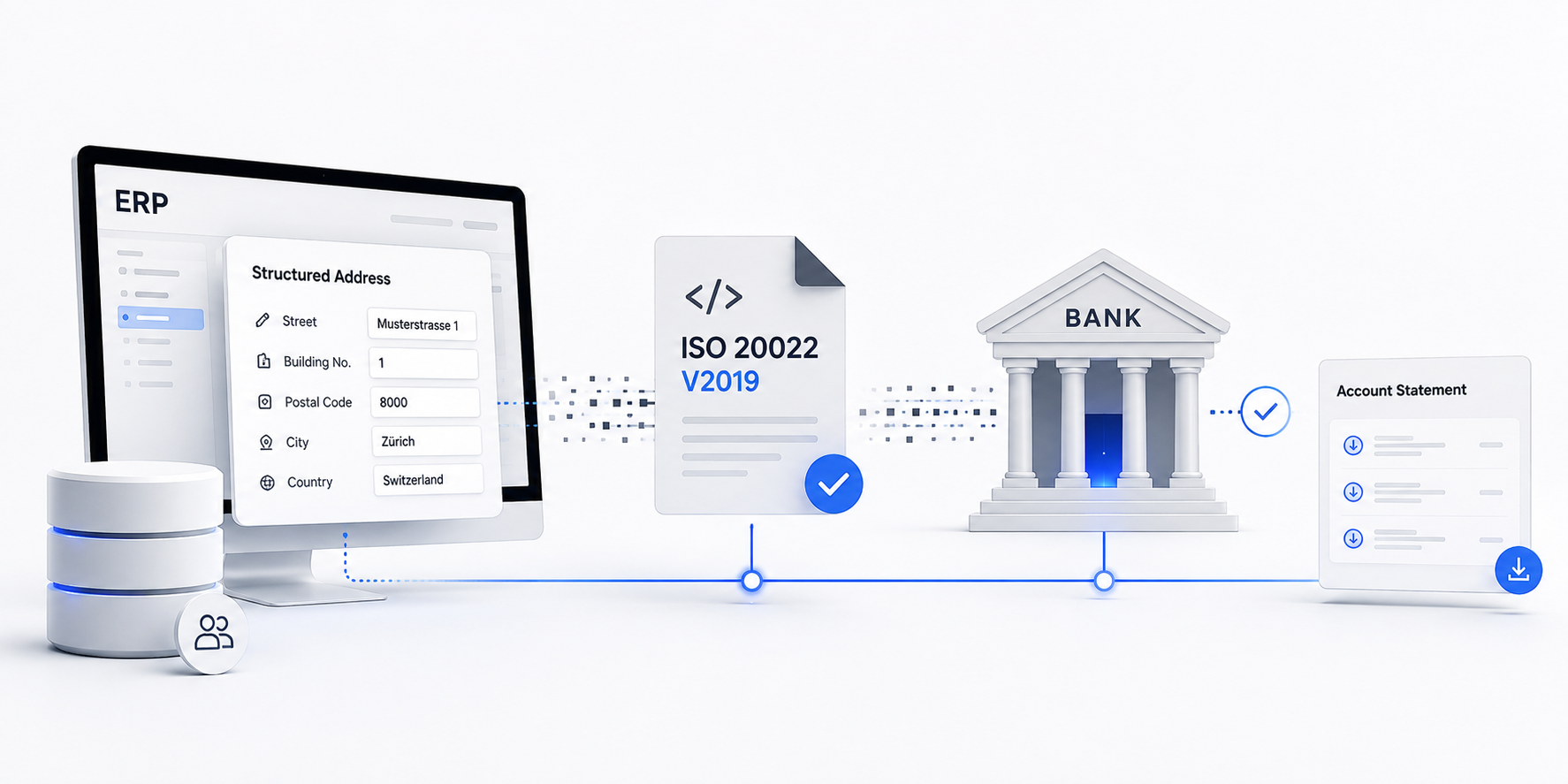
The Swiss payment system is facing its next format change. Starting November 14, 2026, new requirements for electronic data exchange with banks will take effect. At that time, the system will transition to ISO 20022 Version 2019, and the previous Version 2009 will no longer be usable.
The affected payment formats, master data, and system settings should therefore be reviewed and adjusted as needed. Without proper preparation, there is a risk that payment orders will be rejected after the effective date or that electronic account statements cannot be processed as usual.
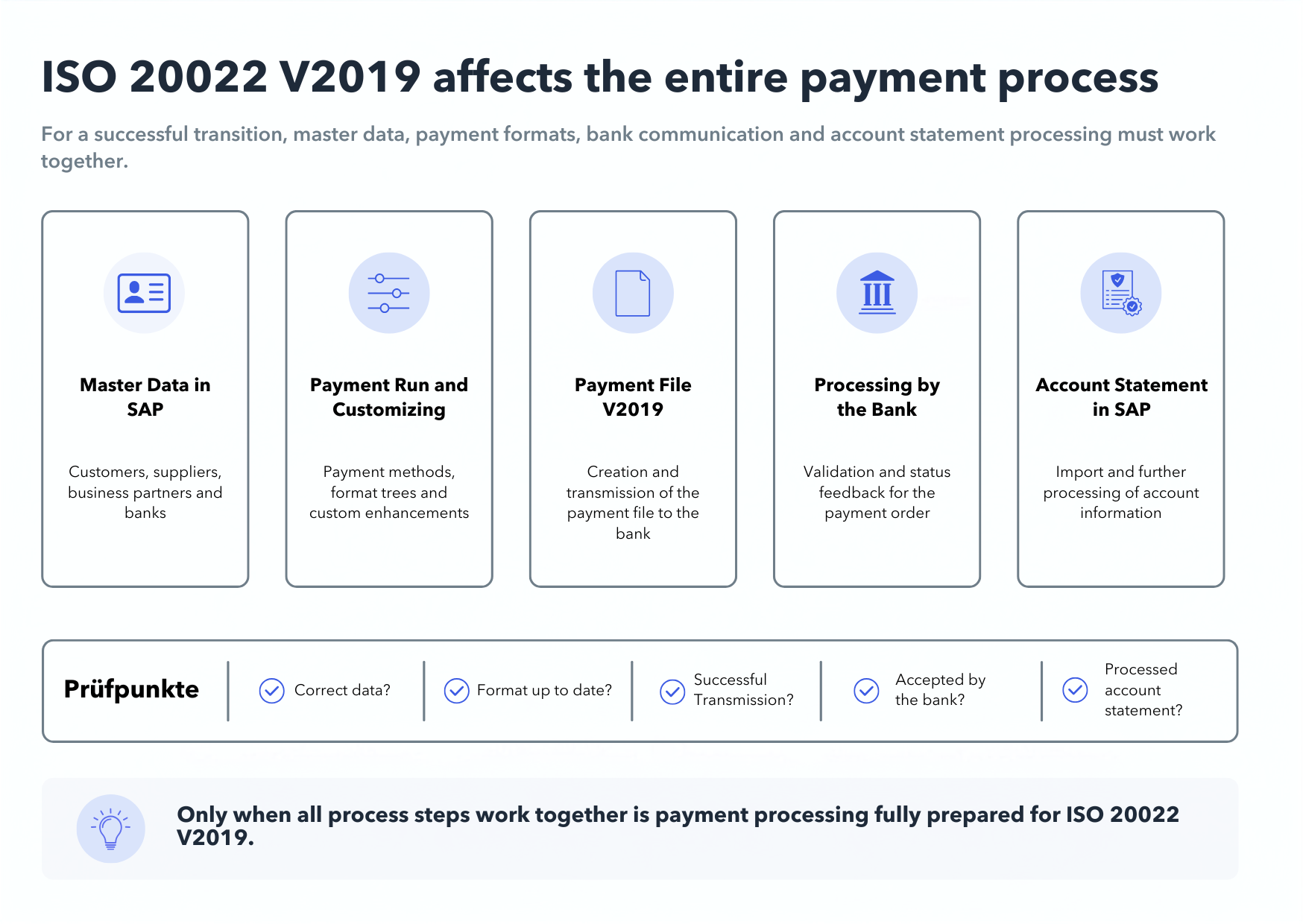
What Changes with ISO 20022 V2019?
V2019 introduces new message versions for payment orders and the processing of account information. In addition, the requirements for address information transmitted in payment transactions are increasing.
The goal of these changes is to further harmonize payment transactions and to enable more unambiguous processing of the transmitted data. Consequently, information regarding the parties involved must be transmitted in a more structured format than before. Unstructured addresses will no longer be permitted as of the effective date.
The following graphic illustrates the difference between an unstructured and a structured address on a payment instrument:
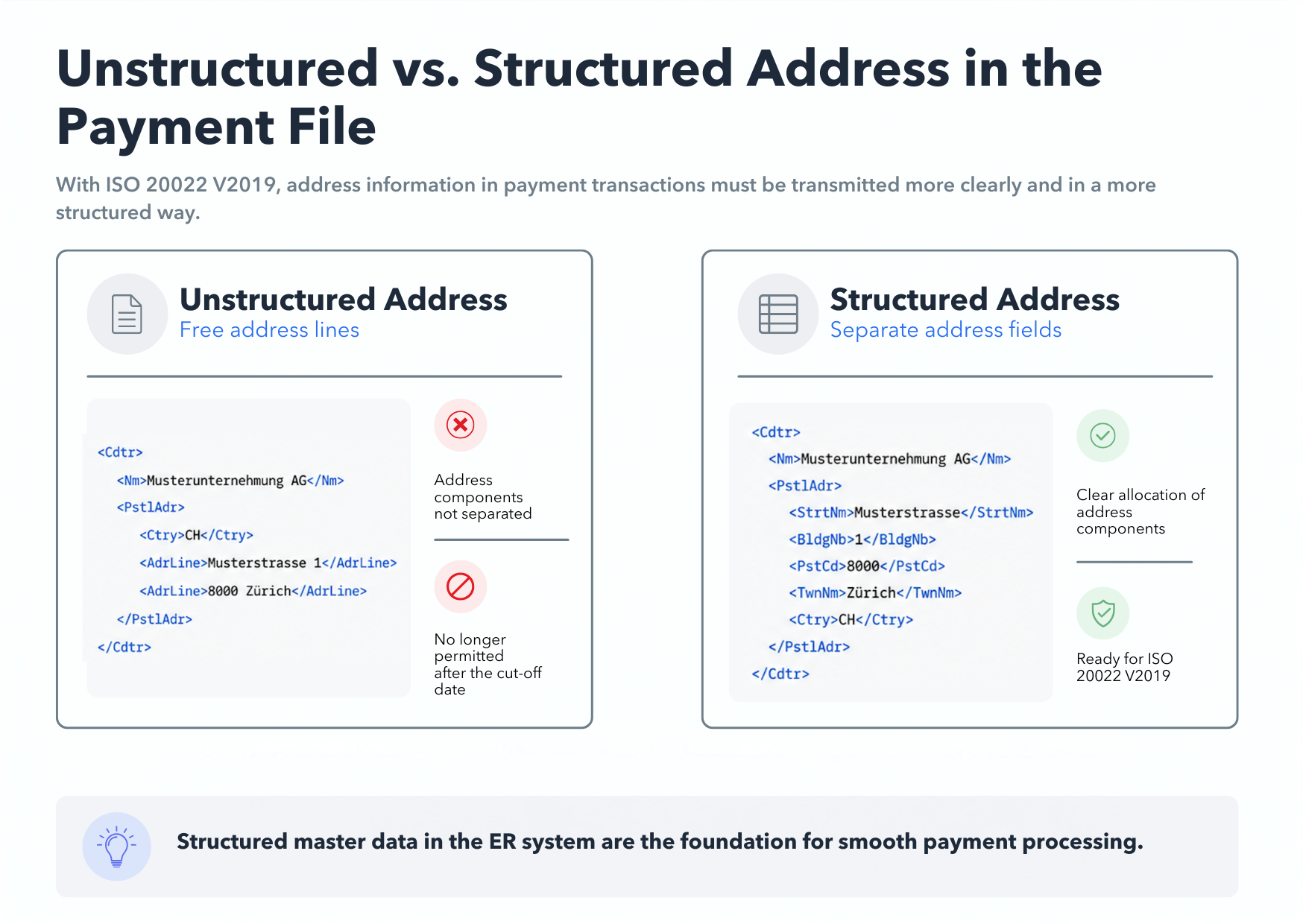
In a structured address, the individual address components are divided into separate fields. This allows the information in payment transactions to be assigned and processed more clearly.
However, this also means that companies must maintain their master data in the ERP system in a sufficiently structured manner. This includes, for example, entering the street name and house number separately whenever possible.
What should be checked in the SAP system?
• Review and implement relevant SAP Notes
• Import new format trees for ISO 20022 V2019 or update existing versions
• Review customer-specific DMEE/DMEEX format trees and extensions
• Review SAP Customizing settings for payment processes and adjust them as needed
• Check and update bank master data
• Check customer, vendor, and business partner master data
• Clean up incomplete or inadequately structured addresses
• Clarify bank-specific requirements and testing options early on
• Test payment files, bank acknowledgments, and electronic account statements
After implementation, tests should ideally be conducted that cover the entire process: from creating the payment file in SAP, through transmission to the bank, to processing the bank response and the electronic account statement.
Different payment types, recipient combinations, currencies, and special cases should also be tested.
Well-Prepared for the Transition
The transition to ISO 20022 V2019 affects several areas simultaneously. We support managers and business users in identifying specific actions needed, making the necessary adjustments to the system, and testing the processes end-to-end before the deadline. We draw on our many years of experience in payment transactions and guide you from analysis through the transition.
Would you like to know where action is needed in your SAP system? We’d be happy to support and advise you personally.
Continue the conversation with the author

Dario Fiorentino
Consultant Finance & Controlling
Book a free 30-min call with Dario and leave with clarity on your next step.
Pick your time in 60 seconds
